 AWExpeditions
Mexico City, Mexico
5,636 m / 18,491 ft · Mexico
Pico de Orizaba
Handbook
For Women, By Women | AWExpeditions
Route at a glance
10,467 ft · 3,190 m La Malinche summit
14,636 ft · 4,461 m Orizaba Base Camp
14,091 ft · 4,295 m High Camp
15,391 ft · 4,691 m Summit
18,491 ft · 5,636 m
Welcome to Orizaba
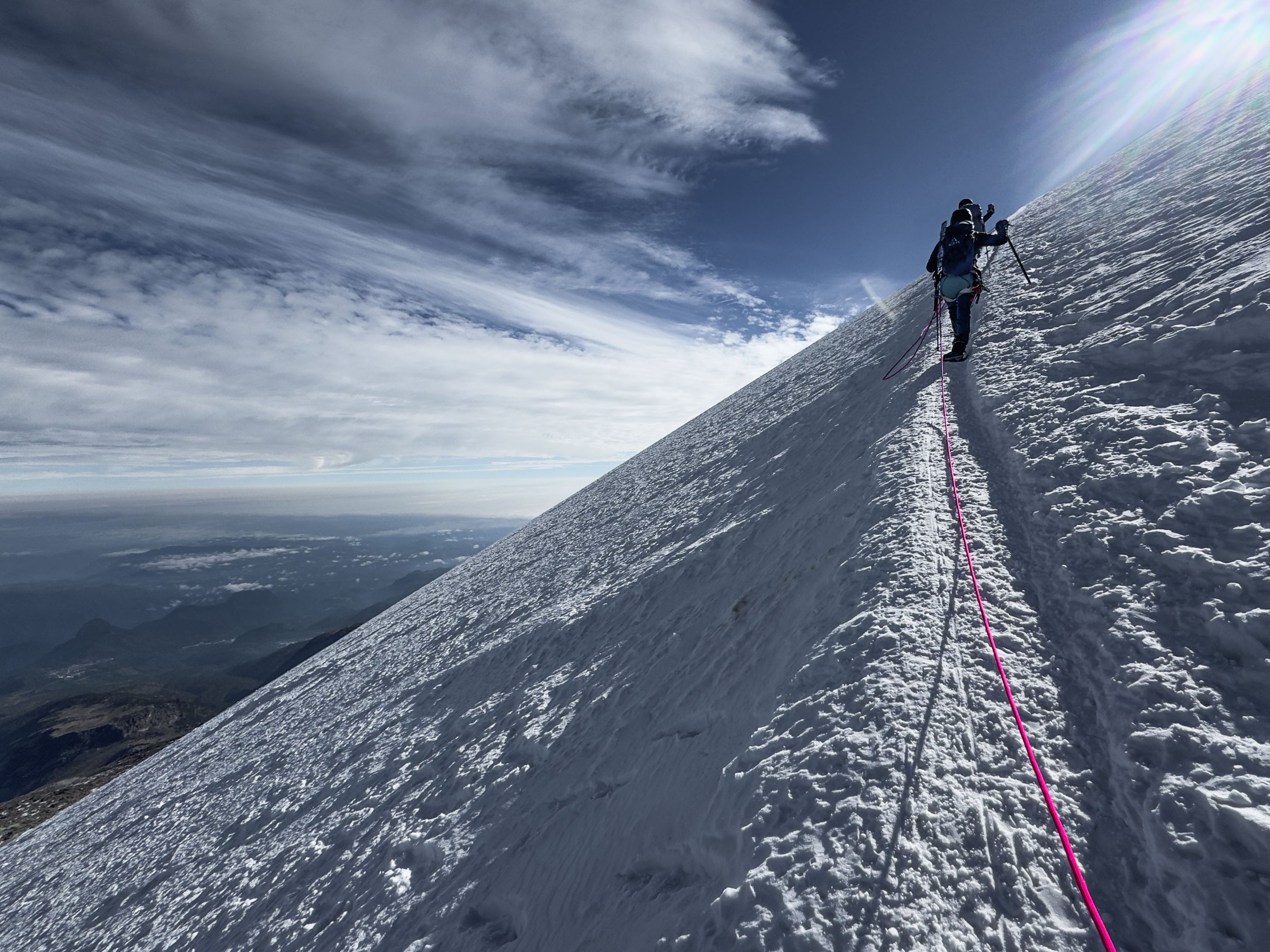
Pico de Orizaba is the highest mountain in Mexico and the third highest in North America, at 5,636 meters (18,491 ft). It’s a few hours from Mexico City, and the easy access is the trap: people rush it, skip acclimatization and turn around. Local guides put the summit rate around half.
We don’t rush it. Day 3 is a climb of La Malinche, Mexico’s sixth highest peak at 4,461 meters (14,636 ft), purely to acclimatize before the real objective. Then we transfer to Orizaba base camp, move up to high camp, spend an afternoon on crampons, ice axe and rope work, and go for the summit.
This handbook is your one stop resource for getting ready: training, gear, the daily plan and the questions people ask most. Read it start to finish, then keep it on hand as you pack and train. We always try to give you clear, accurate information, but we’re not infallible. If anything here is unclear or looks wrong, tell us at [email protected].
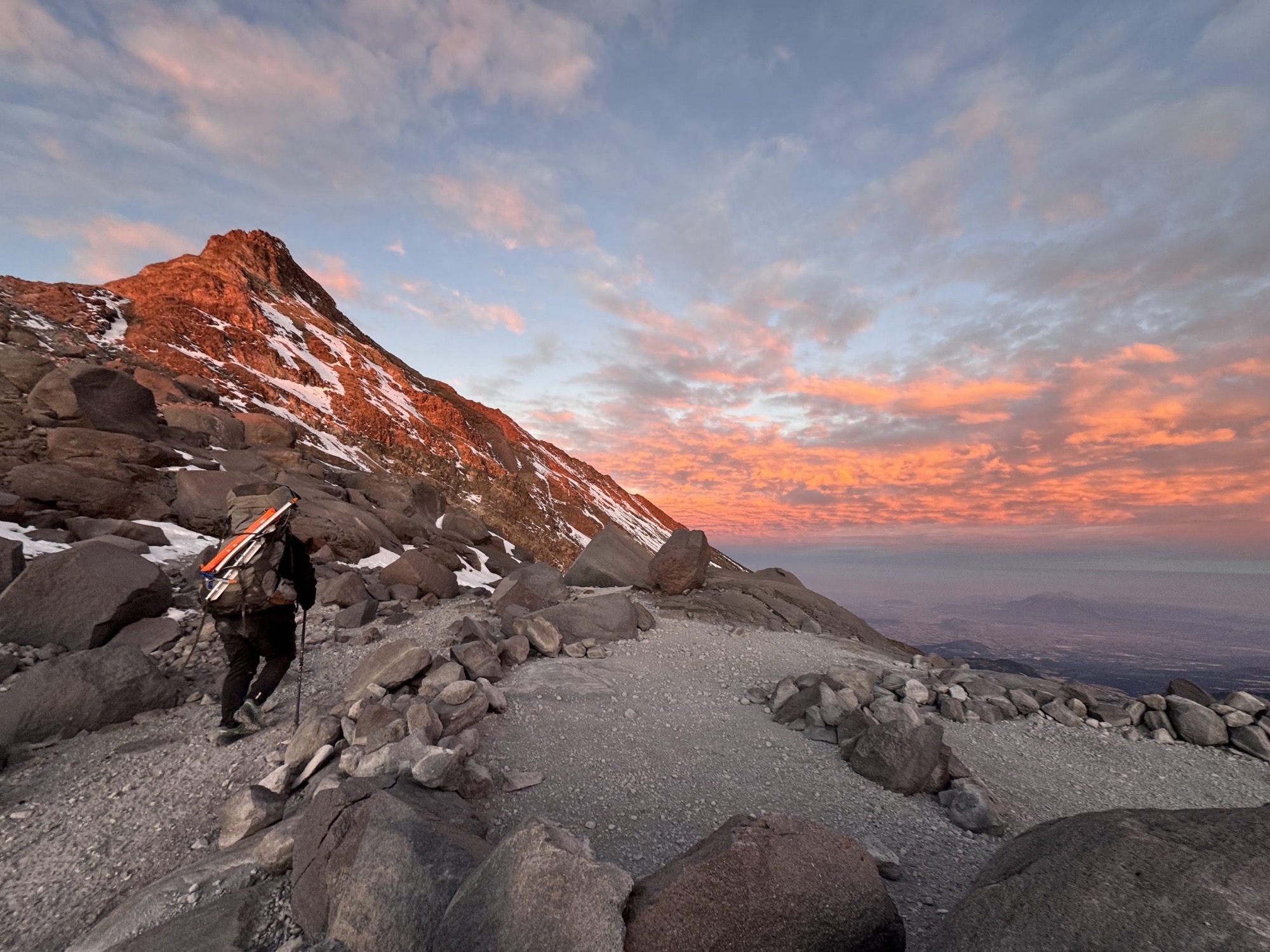 Sunrise on Orizaba, Mexico’s highest peak.
Your one-page checklist
If you read nothing else, read and act on this.
- Training completed. Cardio and strength, well before departure. This expedition is harder than it looks on paper, and Orizaba is one of the more frequently underestimated climbs we run.
- Travel to Mexico City arranged. Hotel check-in starts around 3pm local time on Day 1; our first team business is dinner together around 7pm.
- Rescue insurance obtained and proof sent to us. It’s mandatory. See Insurance requirements below.
- Gear packed. Check it against the gear list and sort out rentals early; most mountaineering gear can be rented in Mexico City.
- Trail snacks sorted. We cover meals, but lunches aren’t always included, so bring a minimum of 2,500 calories a day of your own snacks.
- Personal medications and a small first aid kit ready. Blister care and anything you need for the week.
- Cash for tips set aside. See Tipping and money below.
- Sense of humor and team spirit packed. You’ll want it on summit day.
About AWExpeditions
AWExpeditions was born out of a simple idea: to create space for women in mountaineering. Historically, men have led most of the field, leaving women with fewer opportunities to lead, learn and thrive in these environments. AWE exists to flip that script.
We work together. We lift one another up. We show up for ourselves and for our teammates when things get difficult, and we’re prepared and flexible when the mountain asks for it. Diversity is our strength, and it guides how we approach our teammates, guides, staff and local partners. Creating a safe space for everyone is at the heart of what we do.
About your guides
Your leadership team pairs an AWE expedition leader with local Mexican mountain guides who know the Jamapa Glacier, the route conditions and the high-camp logistics. They’re with you each step of the way, helping guide and personalize the climb on their home mountain.
Training
This isn’t a climb to take on with unprepared legs. Proper training improves your odds of summiting, and it’s essential for safety and for actually enjoying the experience. Start well before your trip.
Your training should center on endurance and strength, with an emphasis on activities that mirror the climb. Hiking on steep, uneven terrain with a loaded pack is the gold standard for preparation. As a general guideline, aim to be able to run a trail half marathon, or hike 12 to 15 miles with a 45-pound pack in a day and feel like you could do it again the next day.
AWE partners with Uphill Athlete, widely regarded as the gold standard for mountaineering fitness, at special pricing for AWE climbers.
Altitude
La Malinche tops out at 4,461 meters (14,636 ft), and Orizaba’s summit is 5,636 meters (18,491 ft). The higher you go, the less oxygen is in each breath, and that affects everyone differently. Fitness doesn’t decide this: altitude sickness, or Acute Mountain Sickness (AMS), can strike anyone. There’s no reliable predictor other than your own history at altitude.
Ascending too quickly increases the risk of AMS. If you develop symptoms serious enough that your guides judge it dangerous, you’ll need to descend on their call, without room for argument. Descending is the only reliable cure; the sooner you do it, the less likely AMS is to advance into potentially fatal HACE (High Altitude Cerebral Edema) or HAPE (High Altitude Pulmonary Edema).
That’s the whole reason La Malinche is built into the itinerary: a real summit, at real altitude, purely to get your body ready for Orizaba. Some climbers use Diamox (acetazolamide) to help the body acclimatize; see the FAQ below for how we think about that, and talk to your doctor before your trip.
Daily itinerary
Weather, snow and the team’s pace can all move this around. Your guides make the calls that matter, especially on summit day.
| Day | Plan |
|---|---|
| 1 | Arrive in Mexico City; welcome dinner |
| 2 | Gear check and transfer to Puebla |
| 3 | Acclimatization climb of La Malinche, 14,636 ft (4,461 m) |
| 4 | Transfer to Orizaba base camp |
| 5 | Hike to high camp; skills session on crampons, ice axe and rope |
| 6 | Summit day, 18,491 ft (5,636 m), weather permitting |
| 7 | Return to Mexico City; final team dinner |
| 8 | Depart |
Route and elevation
The chart above is your whole expedition at a glance: one acclimatization peak, then the real objective. Here’s that same climb broken into its real segments:
- La Malinche trailhead to summit (4,461 m / 14,636 ft). About 7.8 miles and roughly 4,169 ft (1,271 m) of ascent, purely to acclimatize before Orizaba.
- Orizaba base camp to high camp. About 0.7 miles and roughly 1,300 ft (400 m) of ascent.
- High camp to the summit (5,636 m / 18,491 ft) and back. About 4.3 miles and roughly 3,100 ft (900 m) of ascent, the hardest day of the trip and usually the longest.
The mileage looks short on paper. It isn’t: heavy packs and the terrain usually keep travel pace under a mile an hour, and on summit day it can drop to half a mile an hour or slower. Train accordingly.
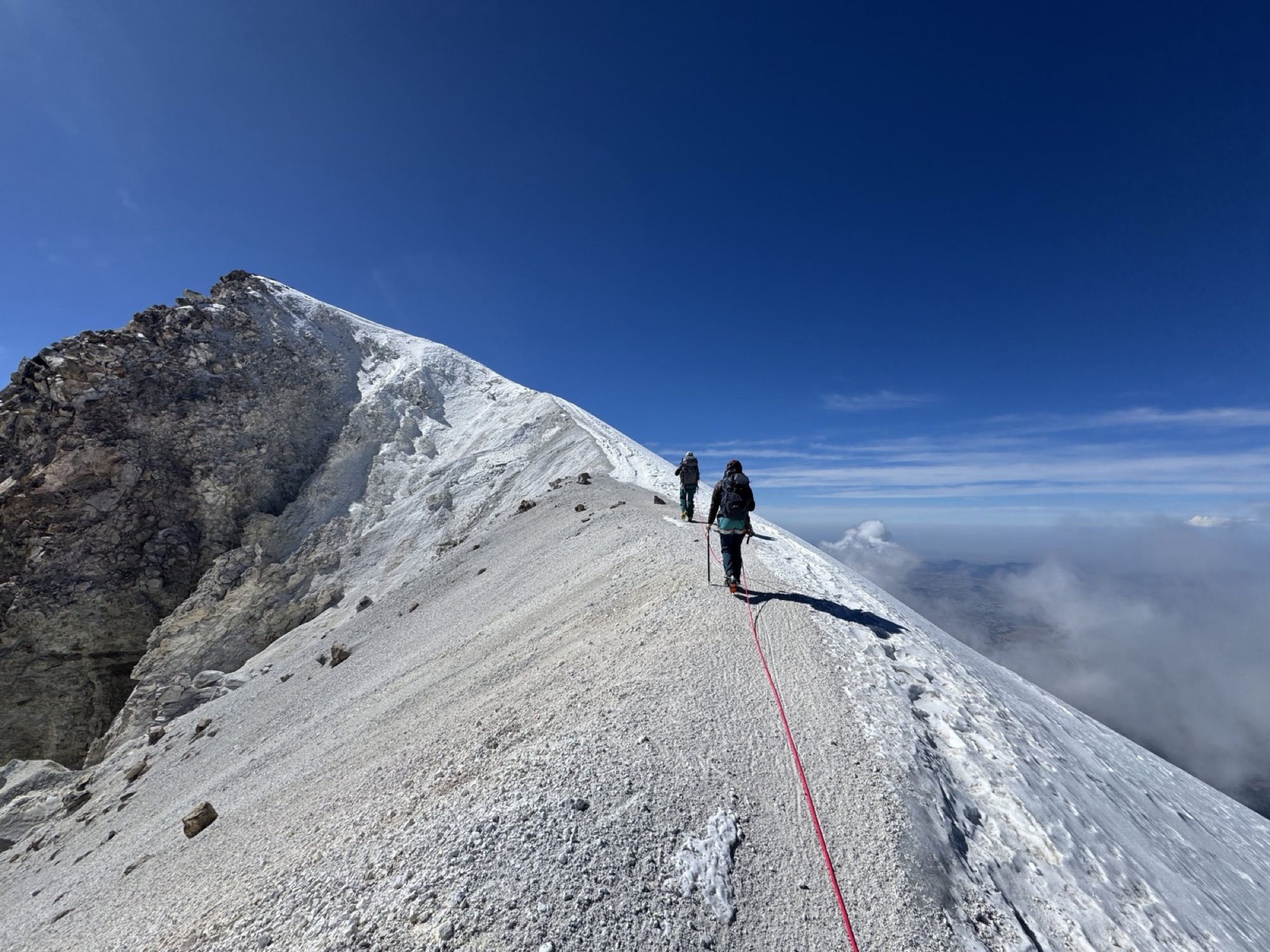 On the ridge, high on Orizaba.
Gear
Everything here is required unless we’ve told you otherwise. Rentals are available in Mexico City for the big-ticket items; ask us early so we can help arrange it.
- Mountaineering boots
- Ice axe and crampons
- Helmet and harness
- 2 locking and 2 non-locking carabiners, tube belay device, prusik cord
- 65-liter or larger pack
- Sleeping bag rated to 15°F or colder
- Sleeping pad
- Trekking poles and gaiters
- Expedition-weight down jacket
- Hard shell jacket
Beyond your climbing pack, bring a large, sturdy duffel bag for gear that travels separately to base camp, and a small town bag for anything you’d rather leave in Mexico City while you’re on the mountain.
Food on the mountain
Expect the full range of mountaineering food: fresh, real meals at base camp, and fortified soups and dehydrated meals up high. Your expedition fee covers breakfasts, lunches and dinners at base camp, and energy-dense breakfasts and dinners above it, plus snacks and light lunches on rest days. Bring a minimum of 2,500 calories a day of your own favorite climbing snacks (bars, trail mix, chocolate, jerky) to round that out, with extra for summit day. We can accommodate vegetarian, vegan, gluten-free, celiac and dairy-free diets with advance notice.
Tipping and money
Tipping in Mexico runs through a shared pool because the expedition relies on a local support team. At the end of the climb, your AWE leader collects and distributes a group tip pool for the local staff:
| Role | Typical tip |
|---|---|
| Head guide(s) | $60 to $100 each |
| Assistant guide(s) | $40 to $80 each |
| Camp manager | $40 to $60 |
| Porters | $20 to $40 each |
As a rule of thumb, plan for about $200 to $250 total per climber for the on-mountain tip pool. Your AWE expedition leader is tipped separately, at your discretion; $100 to $150 per participant is a reasonable guideline. ATMs are available in Mexico City and Puebla, and US cash is widely accepted for exchange.
What’s included and what isn’t
Included:
- Hotel nights in Mexico City and Puebla (double occupancy)
- All transport in Mexico
- Experienced mountain guides
- Welcome and final team dinners; all meals during the climb
- Team gear: four-season tents and cooking gear
- GPS tracking and emergency communications
Not included:
- Flights to and from Mexico City
- Tips for the expedition leader and local guides
- Meals not listed in the itinerary, and drinks
- Personal climbing gear and clothing
- Trail snacks
- Medical, travel and rescue insurance
- Personal medications
- Single room (ask us about availability and price)
- Costs from events outside our control, such as travel delays or extra hotel nights (your insurance should cover these)
Deposit: $500 once you’re accepted. The balance is due in two payments, 90 and 60 days before departure.
Insurance requirements
Preparing for a big adventure means planning for the unexpected. There are two kinds of relevant insurance: travel insurance and rescue (evacuation) insurance. Rescue insurance is mandatory. Travel insurance is highly recommended but your own decision.
Travel insurance. What happens if you sprain an ankle the week before your trip, your car breaks down, or your checked bag with all your mountaineering gear doesn’t arrive on time? We’ve seen all of those scenarios happen. We don’t have a preferred provider, but consider a Cancel For Any Reason policy, which typically lets you recoup your expedition fees and travel costs even if you have to cancel for a reason like a job change or a family matter. We don’t require proof of travel insurance; it’s your own decision.
Rescue insurance. In the event of an emergency, you need coverage that includes helicopter evacuation to avoid the high costs of a rescue operation on Orizaba. Global Rescue is a trusted leader in mountaineering and backcountry travel protection, with comprehensive policies that include both travel and rescue coverage. For a more affordable, basic option, consider joining the American Alpine Club; partner-level membership includes up to $7,500 in trailhead rescue benefits, which satisfies the rescue insurance requirement for this expedition, though it isn’t as comprehensive as a dedicated policy. We do require proof of rescue insurance: please send your policy details to [email protected] before the trip.
Questions? Get in touch.
[email protected] · 833-252-5293 Sunny Stroeer, Founder and Expedition Leader: [email protected] Shea McCrary, General Manager: [email protected]
Frequently asked questions
Do I need mountaineering experience?
No. We teach crampon, ice axe and rope skills on the mountain. You do need to be fit and have hiking experience; backpacking experience helps. As a general guideline, aim to be able to run a trail half marathon, or hike 12 to 15 miles with a 45-pound pack in a day and feel like you could do it again the next day.
Why does the trip include another peak first?
Orizaba is easy to reach and easy to underestimate. Climbing La Malinche on Day 3 gets your body used to altitude before the big push, which is the main reason people summit or don't.
Can I rent gear?
Yes. Most mountaineering equipment, boots, helmets, ice axes, crampons, harnesses and sleeping bags, can be rented in Mexico City without much difficulty. Email us ahead of time so we can confirm availability and pricing on your behalf.
How do I sign up?
Every climber applies. We talk with you about your experience, then offer a spot.
Can I have my own room?
Usually, for an extra fee. Ask us about availability and price for your dates.
Should I take Diamox (acetazolamide)?
That's a decision for you and your doctor. Plenty of climbers summit without it. How well you acclimatize is mostly genetic, and the best predictor is how you've done at altitude before. If you've never been this high, Diamox can improve your odds, but it has side effects and takes a day or two to start working. If you'd rather learn what your body does on its own, skip it.