 AWExpeditions
Burlington, Washington
3,286 m / 10,781 ft · Washington
Mount Baker Mountaineering School
Handbook
For Women, By Women | AWExpeditions
Route at a glance
2,781 ft · 848 m Base Camp
5,781 ft · 1,762 m Summit
10,781 ft · 3,286 m Trailhead
2,781 ft · 848 m
Welcome to Komo Kulshan
Mount Baker is a 10,781-foot (3,286-meter) glaciated volcano about three hours north of Seattle. Its Indigenous name is Komo Kulshan, often translated as “Great White Watcher,” given by the Lummi and Nooksack peoples whose territory it sits in; the Skagit Tribe calls it Kweq’ Smánit, “Mother of All Waters,” for its role feeding the rivers of the region. It’s big enough to teach everything a first glacier climb needs, and close enough that you don’t spend half the trip getting there.
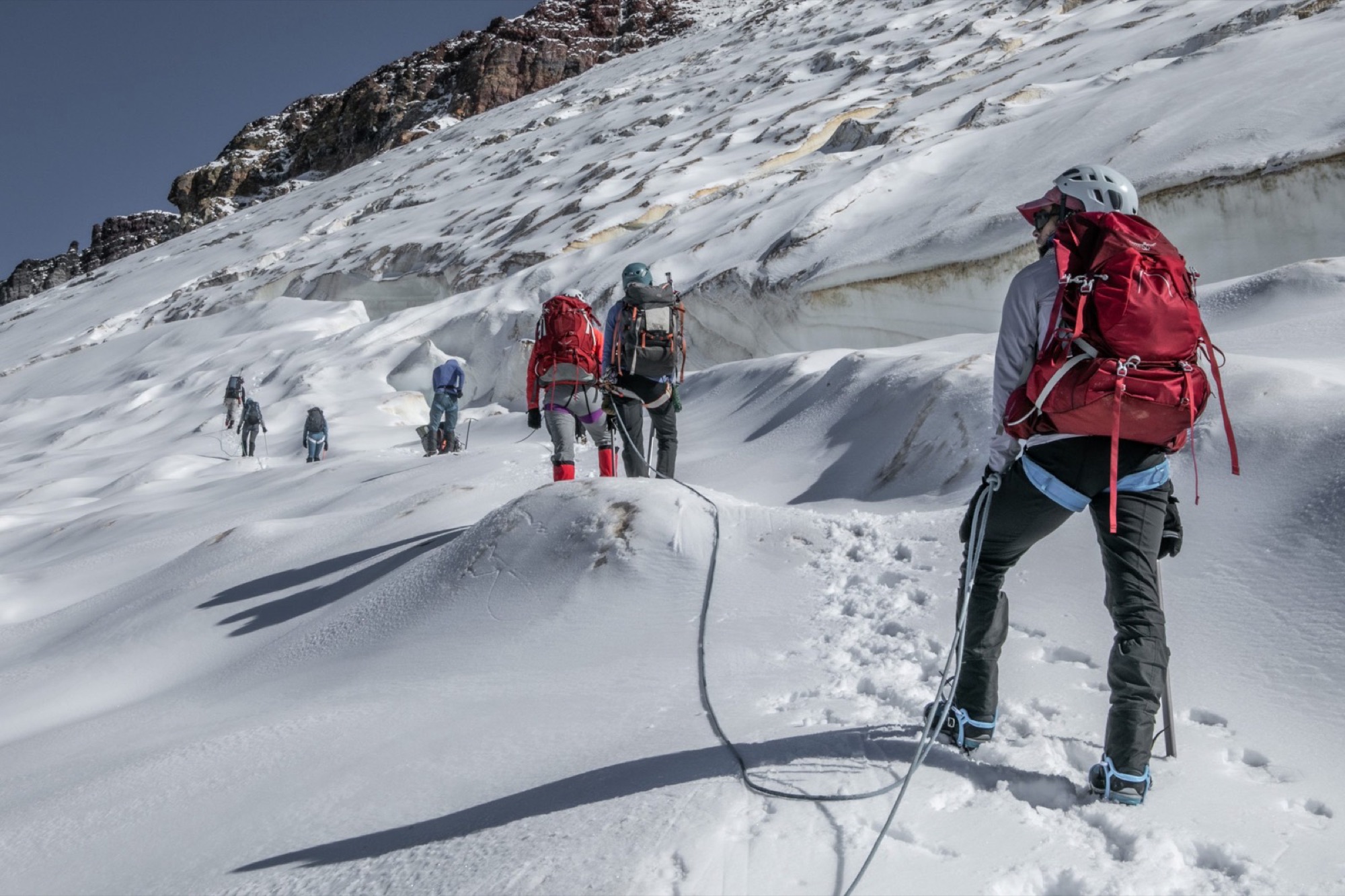
We meet in Burlington for dinner and a gear check. The next day we hike up to four miles and 3,000 feet (900 m) to base camp, carrying 40 to 50 pounds. One full day is dedicated to skills: footwork and crampon use, ice axe self-arrest, rope systems and crevasse rescue basics. The following two days give us two chances at the summit by the Easton or Squak Glacier, with a light pack and an early start; whichever day the weather doesn’t cooperate becomes more skills practice instead.
This handbook is your one stop resource for getting ready: training, gear, the daily plan and the questions people ask most. Read it start to finish, then keep it on hand as you pack and train. We always try to give you clear, accurate information, but we’re not infallible. If anything here is unclear or looks wrong, tell us at [email protected].
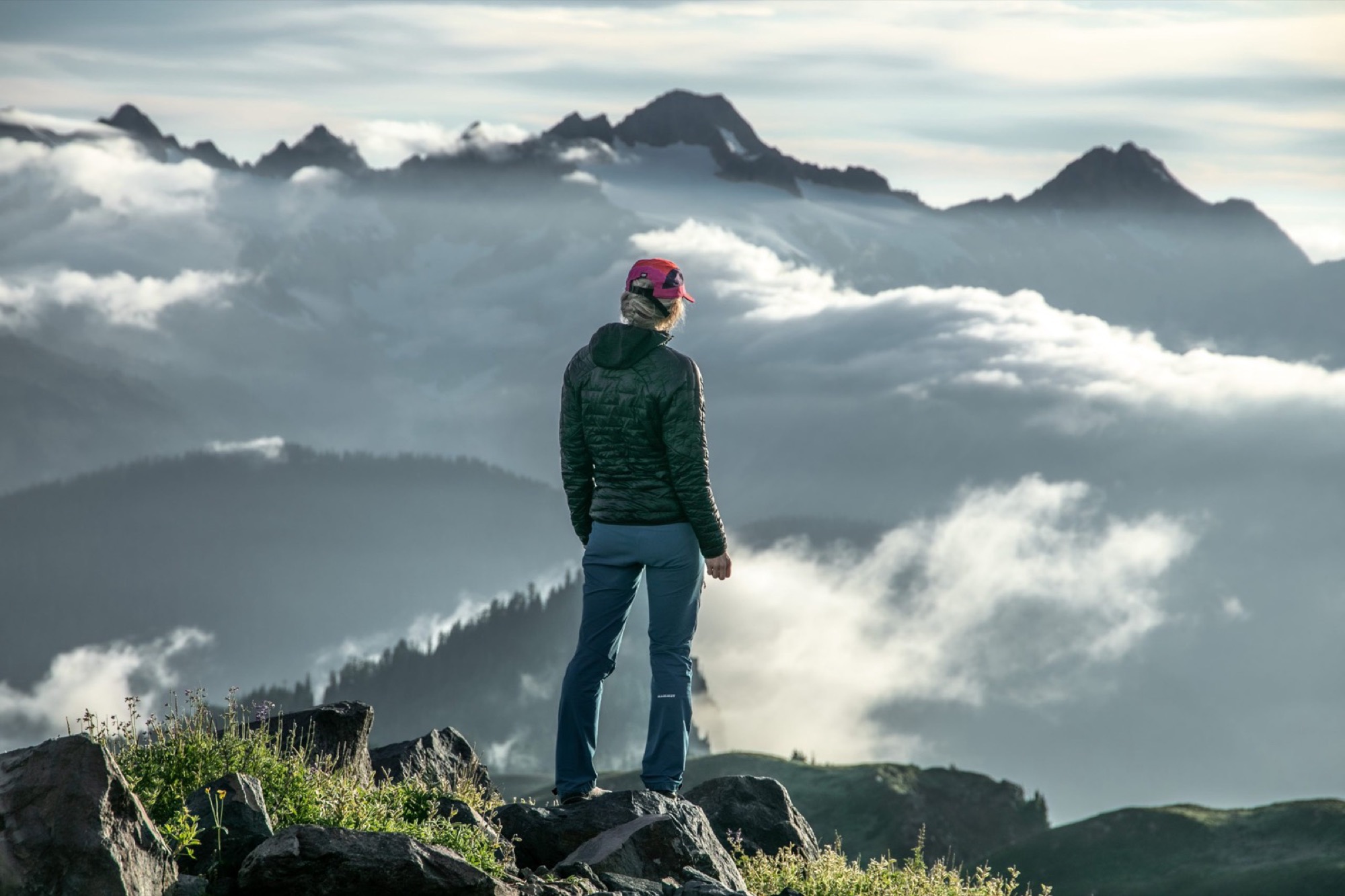 Above the clouds on Komo Kulshan.
Your one-page checklist
If you read nothing else, read and act on this.
- Training completed. Cardio and strength, well before departure. This course is harder than it looks on paper.
- Travel to Burlington arranged. Plan to arrive by 4pm on Day 1 for the welcome dinner. Burlington is about 2 hours by car from Seattle-Tacoma International Airport.
- Rescue insurance obtained and proof sent to us. It’s mandatory. See Insurance requirements below.
- Gear packed. Check it against the gear list and sort out rentals early through Northwest Mountain Shop; book ahead to make sure they have what you need.
- Trail snacks sorted. We cover main meals on the mountain, but lunches aren’t always included, so bring about a pound of your own snacks per day, with extra for summit day.
- Personal medications and a small first aid kit ready. Blister care and anything you need for the week.
- Sense of humor and team spirit packed. You’ll want it on the hike up to base camp.
About AWExpeditions
AWExpeditions was born out of a simple idea: to create space for women in mountaineering. Historically, men have led most of the field, leaving women with fewer opportunities to lead, learn and thrive in these environments. AWE exists to flip that script.
We work together. We lift one another up. We show up for ourselves and for our teammates when things get difficult, and we’re prepared and flexible when the mountain asks for it. Diversity is our strength, and it guides how we approach our teammates, guides, staff and local partners. Creating a safe space for everyone is at the heart of what we do.
About your guides
Women guide this course, with a low climber-to-guide ratio so instruction stays personal and focused. Guide assignments vary trip to trip; we’ll introduce you to your specific guide team in the weeks before departure.
Training
This isn’t a course to take on with unprepared legs. Proper training is essential for safety and for actually enjoying the experience. Start well before your trip.
Your training should center on endurance and strength, with an emphasis on activities that mirror the climb. Hiking on steep, uneven terrain with a loaded pack is the gold standard for preparation. As a general guideline, aim to be able to run a trail half marathon, or hike 12 to 15 miles with a 45-pound pack in a day and feel like you could do it again the next day.
AWE partners with Uphill Athlete, widely regarded as the gold standard for mountaineering fitness, at special pricing for AWE climbers.
Daily itinerary
Weather, snow and the team’s pace can all move this around. Your guides make the calls that matter, especially on summit day.
| Day | Plan |
|---|---|
| 1 | Arrive in Burlington, WA by 4pm; gear check, briefing and welcome dinner |
| 2 | Pick up rentals, drive to Mount Baker, hike to base camp |
| 3 | Full day of skills practice |
| 4 | Summit attempt or more skills practice |
| 5 | Summit attempt or more skills practice, then break camp, hike out and drive to town; final dinner |
| 6 | Depart |
Route and elevation
The chart above shows a typical summit attempt. Here’s that same climb broken into its real segments, approaching from the south on the Easton or Squak Glacier:
- Trailhead to base camp. Up to 4 miles and about 3,000 ft (900 m) of gain, carrying 40 to 50 pounds.
- Base camp to the summit (10,781 ft / 3,286 m) and back. Up to 4 miles each way and about 5,000 ft (1,500 m) of gain, with a light pack and an early start.
The mileage looks short on paper. It isn’t: heavy packs and glacier terrain usually keep travel pace under a mile an hour, and on summit day it can drop to half a mile an hour or slower. Train accordingly.
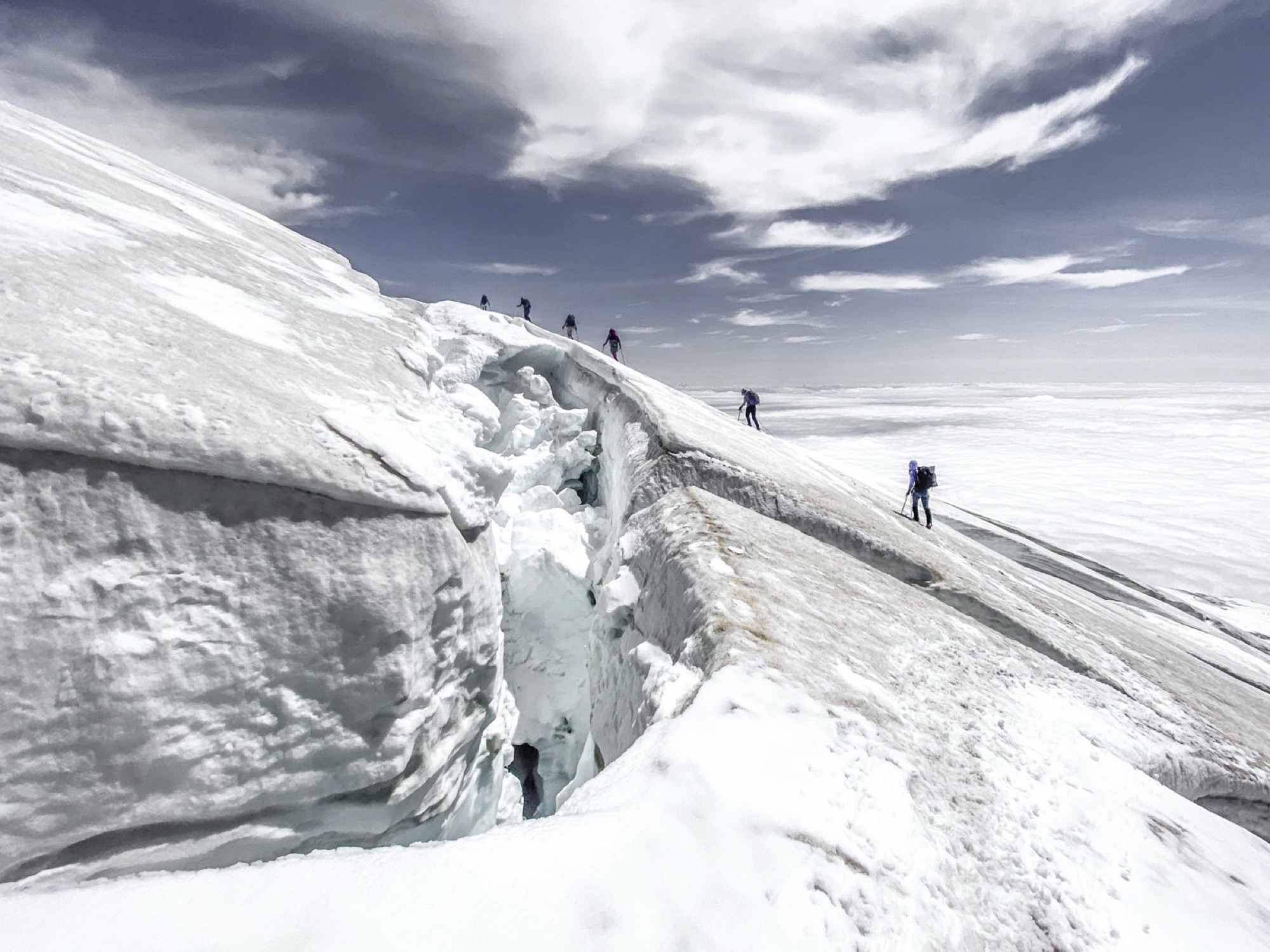 Crevasse rescue practice, part of the skills curriculum.
Gear
Everything here is required unless we’ve told you otherwise. Crampons, ice axes, helmets and more can be rented on-site through Northwest Mountain Shop; we recommend reserving in advance to make sure they have what you need.
- Mountaineering boots
- Ice axe and crampons
- Helmet, harness and 2 locking carabiners
- 55-liter or larger pack
- Sleeping bag rated 20°F
- Sleeping pad
- Trekking poles
- Expedition-weight down jacket
- Hard shell jacket
Between the mandatory gear and your share of group gear (around 10 pounds for tents, ropes and shared food), expect your pack to weigh 40-plus pounds at the start of the climb. Bring a small, lightweight duffel bag for anything you’d rather leave at the hotel while you’re on the mountain.
What’s included and what isn’t
Included:
- Welcome and final dinners
- Guide team: an AWE expedition leader and experienced guides
- Main meals on the mountain (vegetarian, gluten-free and dairy-free with notice)
- Team gear: four-season tents (two per tent), ropes, snow anchors, team medical kit
- GPS tracking and communications on the mountain
- Mount Baker permits
Not included:
- Travel to Burlington, WA (SeaTac transfer add-on available)
- Trailhead transfers (add-on available)
- Hotel nights in Burlington (add-on available)
- Meals not listed in the itinerary
- Tips for guides
- Personal climbing gear and clothing
- Personal medications
- Drinks other than water
- Trail snacks
- Medical, travel and rescue insurance
- Single room (ask us about availability and price)
- Extra costs from leaving the mountain early
Price: $1,675 per person, plus 8.45% sales tax.
Insurance requirements
Preparing for a big adventure means planning for the unexpected. There are two kinds of relevant insurance: travel insurance and rescue (evacuation) insurance. Rescue insurance is mandatory. Travel insurance is highly recommended but your own decision.
Travel insurance. What happens if you sprain an ankle the week before your trip, your car breaks down, or your checked bag with all your mountaineering gear doesn’t arrive on time? We’ve seen all of those scenarios happen. We don’t have a preferred provider, but consider a Cancel For Any Reason policy, which typically lets you recoup your trip fees and travel costs even if you have to cancel for a reason like a job change or a family matter. We don’t require proof of travel insurance; it’s your own decision.
Rescue insurance. In the event of an emergency, you need coverage that includes helicopter evacuation to avoid the high costs of a rescue operation on Mount Baker. Global Rescue is a trusted leader in mountaineering and backcountry travel protection, with comprehensive policies that include both travel and rescue coverage. For a more affordable, basic option, consider joining the American Alpine Club; partner-level membership includes up to $7,500 in trailhead rescue benefits, which satisfies the rescue insurance requirement for this course, though it isn’t as comprehensive as a dedicated policy. We do require proof of rescue insurance: please send your policy details to [email protected] before the trip.
Questions? Get in touch.
[email protected] · 833-252-5293 Sunny Stroeer, Founder and Expedition Leader: [email protected] Shea McCrary, General Manager: [email protected]
Frequently asked questions
How fit do I need to be?
You don't need climbing experience, but you need good cardio and legs. Any one of these is a good sign: six to eight hours of hiking with a 40-pound pack; 12 to 15 miles in a day with a 45-pound pack; or a trail half marathon. Either way, you should feel ready to go again the next day.
How technical is Baker?
It's a moderate glacier climb with crevasse crossings and some steeper sections. Summit day is usually five to seven hours of steady effort, longer in soft snow. The mileage looks short on paper: heavy packs and glacier terrain usually keep travel pace under a mile an hour, and on summit day it can drop to half a mile an hour or slower.
How much will I carry?
40 to 50 pounds to base camp, including some team gear. On summit day, 10 to 15 pounds of layers, food and water.
What's the weather like?
Mostly dry in summer, but the North Cascades get fast storms. Temperatures can run from the 80s to below freezing. Bring gear rated to 20°F.
Can you help with lodging and getting there?
Yes. Add Burlington lodging and trailhead transfers for $395, or lodging plus transfers from SeaTac for $450. The SeaTac shuttle leaves at 1pm on Day 1 and is back by 11am on Day 6.
Which route do we take?
Usually the Easton or Squak Glacier, approaching from the south. Route choice depends on glacier conditions and how busy the mountain is; we'll sometimes choose the quieter Squak over the more popular Easton on a crowded weekend.